Google Ads for Business: Complete Guide
Discover how Google Ads can help businesses reach potential customers, generate qualified leads, increase sales, and build a measurable digital marketing strategy.
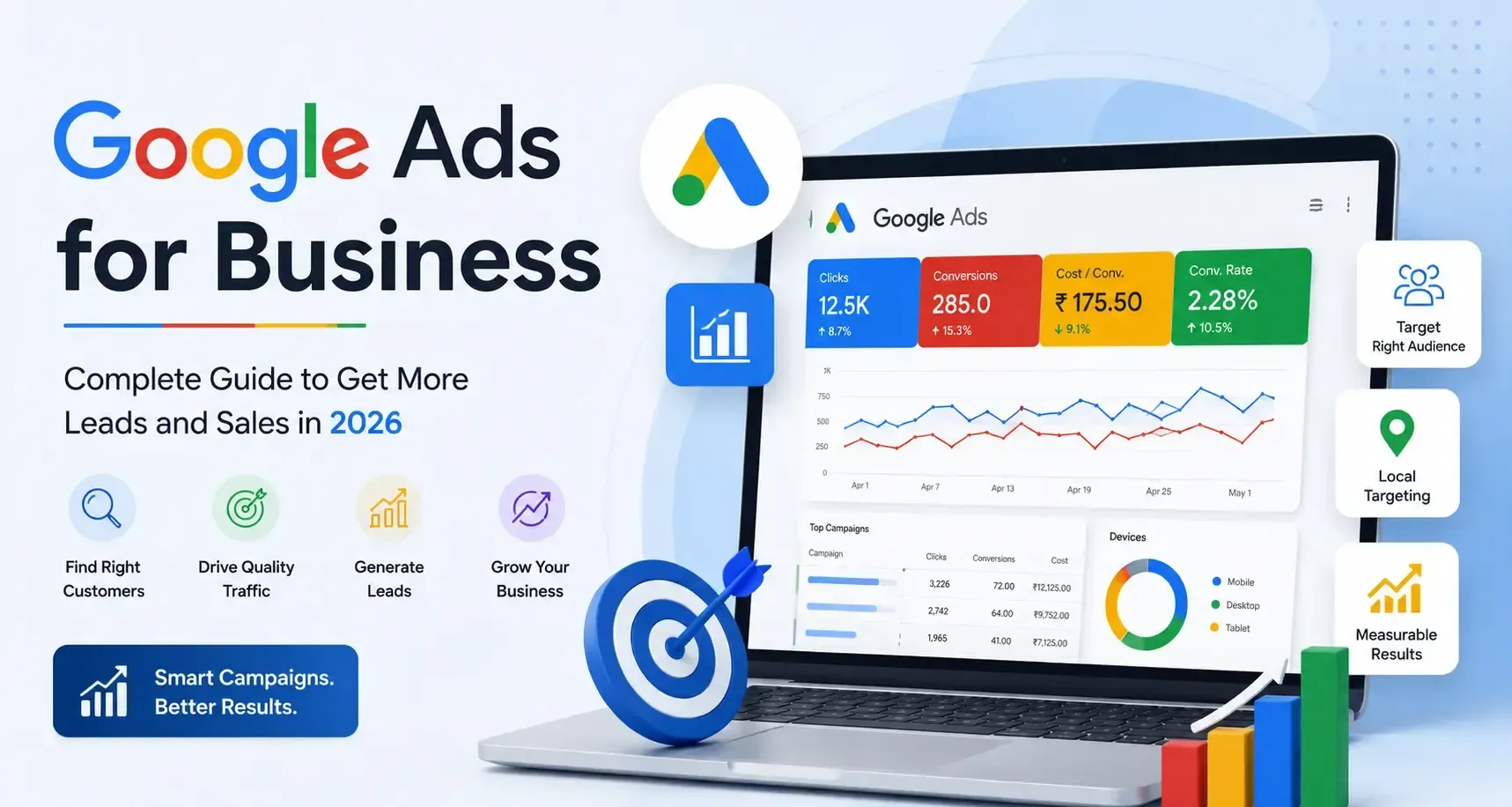
If your potential customers are searching for your products or services on Google, Google Ads for business can help you reach them at the exact moment they are looking for a solution.
Unlike many traditional advertising methods, Google Ads allows businesses to target people based on what they search for, where they are located, the device they use, and other signals. When campaigns are planned correctly, businesses can generate qualified traffic, leads, phone calls, enquirers, bookings, and sales.
However, simply creating a campaign and adding keywords is not enough.
Successful Google Ads campaigns require the right combination of keyword research, campaign structure, compelling advertisements, landing pages, conversion tracking, bidding strategies, audience targeting, and continuous optimization.
This guide explains how Google Ads works for businesses and how you can build a more effective campaign.
What Is Google Ads?
Google Ads is Google's online advertising platform that allows businesses to promote their products and services across Google's advertising network.
Businesses can create advertisements that appear when potential customers search for relevant products or services.
For example, imagine someone searches:
“best taxi service in Chennai”
A taxi company running a relevant Google Search campaign may have an opportunity to appear prominently in the search results.
Similarly, someone searching for:
- digital marketing agency near me
- hospital appointment booking software
- website development company Chennai
- best accounting software for small business
may see advertisements from businesses offering those services.
The major advantage is intent.
The person is already searching for something related to a product or service, so the business can reach the customer at an important stage of the buying journey.
How Does Google Ads Work?
Google Ads generally works through an auction system.
When someone performs a search that may trigger an advertisement, Google evaluates eligible ads and determines which advertisements can appear and in what position.
The result is influenced by multiple factors, including:
- Bid
- Ad relevance
- Landing page experience
- Expected performance
- Keyword relevance
- Search context
- Competition
- Ad quality
This means that simply increasing your advertising budget does not automatically guarantee better results.
A well-structured campaign with relevant advertisements and a strong landing page can potentially perform better than a poorly structured campaign with a much larger budget.
Why Should Businesses Use Google Ads?
Google Ads can provide several advantages when campaigns are managed properly.
1. Reach Customers With High Intent
People searching for a specific product or service often already have a need.
For example:
“emergency plumber Chennai”
shows stronger commercial intent than someone simply reading a general article about plumbing.
Google Ads allows businesses to compete for these valuable searches.
2. Generate Leads
Businesses can use Google Ads to generate:
- Phone calls
- Website enquiries
- Contact-form submissions
- Appointment requests
- Product purchases
- WhatsApp enquiries
- Bookings
- Demo requests
The exact conversion depends on the business model.
3. Target Specific Locations
Local businesses can target particular geographic areas.
For example, a company may target:
- Chennai
- Coimbatore
- Madurai
- Bengaluru
- Specific states
- Specific countries
Location targeting can help businesses avoid spending their entire budget on users outside their service area.
4. Control Advertising Budget
Businesses can set campaign budgets and monitor spending.
This makes Google Ads particularly useful for businesses that want a measurable advertising channel rather than relying entirely on traditional advertising.
5. Measure Results
One of the biggest advantages of digital advertising is measurement.
Businesses can track metrics such as:
- Impressions
- Clicks
- Click-through rate
- Cost per click
- Conversions
- Conversion rate
- Cost per conversion
- Conversion value
- Return on ad spend
This data can then be used to improve campaign performance.
Different Types of Google Ads Campaigns
Google Ads offers different campaign formats designed for different marketing objectives.
Google Search Ads
Search Ads appear when people search on Google for relevant keywords.
They are particularly useful for businesses that want to capture existing demand.
Examples include:
“SEO agency in Chennai”
“car rental in Coimbatore”
“CRM software for small business”
Search campaigns are often highly valuable for lead-generation businesses because they can reach customers who are actively looking for a solution.
Google Display Ads
Display campaigns can show advertisements across websites, apps, and other placements within Google's advertising ecosystem.
They can be useful for:
- Brand awareness
- Remarketing
- Product promotion
- Audience reach
Display advertising is generally different from Search advertising because users may not be actively searching for the product when they see the advertisement.
Shopping Ads
Shopping campaigns are designed primarily for businesses selling products online.
They can display product information such as:
- Product image
- Product name
- Price
- Store information
This can help shoppers compare products before visiting an online store.
Video Advertising
Google's video advertising ecosystem allows businesses to promote video content to relevant audiences.
Video campaigns can support:
- Brand awareness
- Product education
- Remarketing
- Audience engagement
Performance Max Campaigns
Performance Max campaigns allow advertisers to access multiple Google advertising channels through a single campaign.
Depending on campaign configuration and available inventory, advertisements can reach customers across Google's properties.
Performance Max can be useful when businesses have reliable conversion data and clear campaign objectives.
How to Choose the Right Google Ads Keywords
Keyword selection is one of the most important parts of a Google Ads campaign.
Suppose you operate a taxi business in Chennai.
Instead of targeting extremely broad terms such as:
taxi
you could investigate more specific searches such as:
- taxi service Chennai
- airport taxi Chennai
- Chennai airport cab
- outstation taxi Chennai
- Chennai to Pondicherry taxi
More specific searches can sometimes indicate stronger commercial intent.
However, keyword selection should always be based on actual search demand, competition, relevance, and conversion potential.
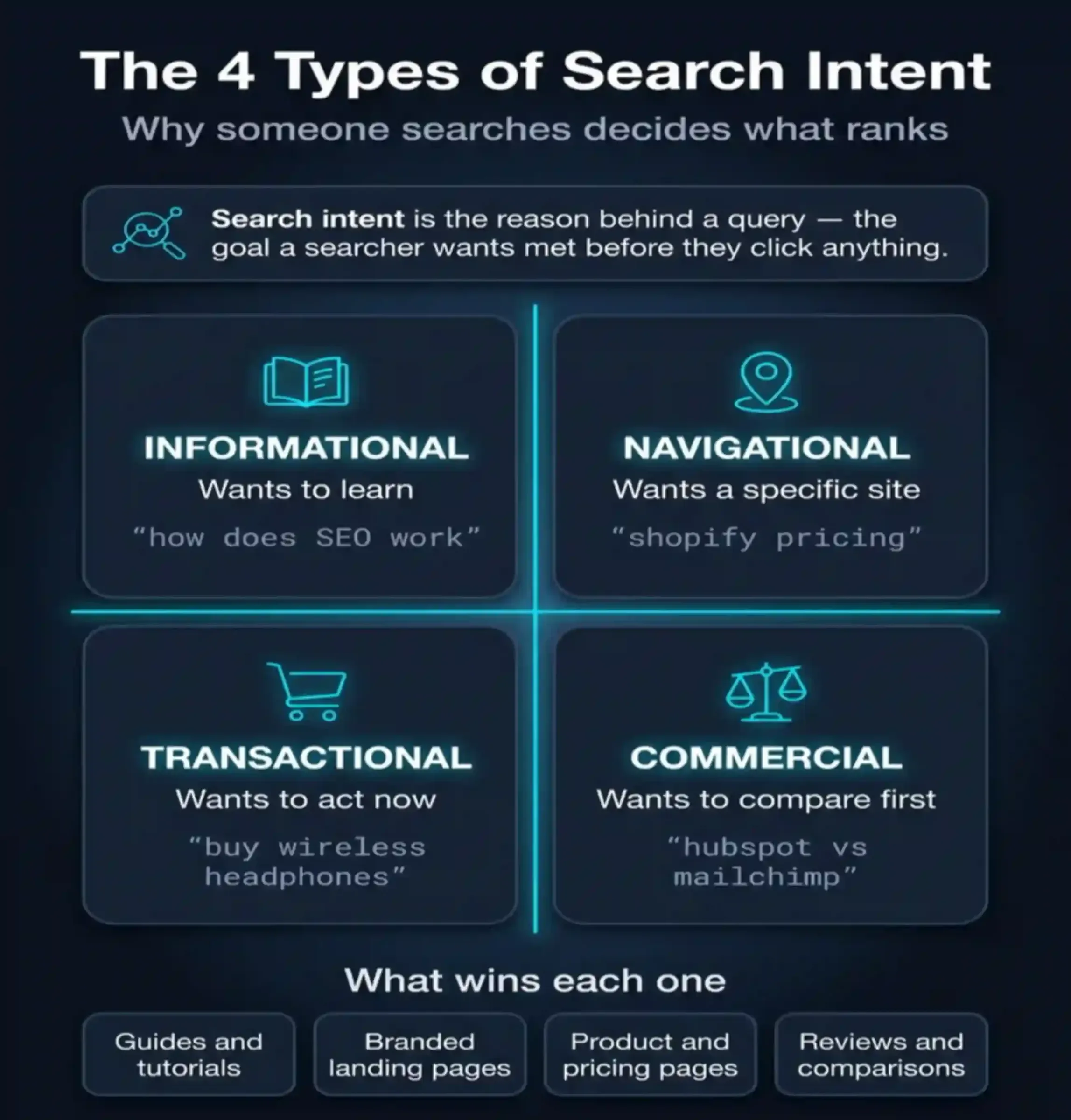
Understand Search Intent
Not every keyword represents the same type of customer.
Search intent can broadly be divided into different categories.
Informational Intent
The user wants information.
Example:
“what is Google Ads”
Commercial Intent
The user is researching a product or service before making a decision.
Example:
“best Google Ads agency Chennai”
Transactional Intent
The user is closer to taking action.
Example:
“hire Google Ads agency Chennai”
Navigational Intent
The user is trying to find a specific website or business.
Example:
“Google Ads login”
Understanding intent helps businesses create campaigns that match what users actually want.
What Are Negative Keywords?
Negative keywords prevent advertisements from showing for unwanted searches.
For example, suppose a company sells premium web development services.
It may not want to spend money on searches containing terms such as:
- free
- tutorial
- course
- jobs
- internship
depending on its business goals.
Adding appropriate negative keywords can reduce irrelevant clicks and improve budget efficiency.
However, negative keywords should be reviewed carefully because overly aggressive exclusions can also block valuable searches.
How to Write Better Google Ads
Your advertisement should quickly communicate:
What you offer + Why customers should choose you + What they should do next
For example:
Headline:
Professional Website Development Services
Description:
Build a fast, responsive business website designed to generate enquiries. Contact our team today.
Good advertisements should be:
- Relevant to the search
- Clear
- Specific
- Easy to understand
- Aligned with the landing page
- Focused on the customer's needs
Avoid making unrealistic claims simply to attract clicks.
Why Landing Pages Matter
Getting the click is only one part of Google Ads.
The next step is converting that visitor.
Imagine someone searches for:
“Google Ads management service”
They click your advertisement and land on a page that talks about completely different services.
The visitor may leave immediately.
A good landing page should match the advertisement and search intent.
It should clearly communicate:
- What the business offers
- Who the service is for
- Main benefits
- Important features
- Trust signals
- Testimonials or reviews where appropriate
- Contact options
- Clear call-to-action
The goal is to reduce friction between the user's search and the action you want them to take.
Conversion Tracking Is Essential
One of the biggest mistakes businesses make is measuring only clicks.
A campaign may receive hundreds of clicks but generate very few valuable enquiries.
Conversion tracking helps answer the more important question:
“What happened after the click?”
Depending on the business, conversions could include:
- Phone calls
- Forms
- Purchases
- Bookings
- Sign-ups
- Appointments
- Quote requests
- Product enquiries
Without reliable conversion tracking, it becomes much harder to understand which campaigns, keywords, advertisements, and audiences are producing business results.
Important Google Ads Metrics to Monitor
Click-Through Rate
CTR measures how frequently users click an advertisement after seeing it.
A higher CTR can indicate that an advertisement is relevant and attractive to the audience, although CTR should always be evaluated in context.
Cost Per Click
CPC represents the amount paid for a click.
Different industries and keywords can have dramatically different CPCs because competition and commercial value vary.
Conversion Rate
Conversion rate tells you how many users completed a desired action compared with the number of relevant interactions.
For example:
If 100 visitors arrive on your landing page and 10 submit an enquiry, the conversion rate is 10%.
Cost Per Conversion
Cost per conversion helps businesses understand how much advertising spend is associated with generating a conversion.
This is particularly important for lead-generation campaigns.
Return on Ad Spend
For businesses that can assign monetary value to conversions, ROAS can help evaluate advertising efficiency.
For example, if a business spends ₹10,000 on advertising and generates ₹50,000 in attributed revenue, the ROAS is 5x.
However, revenue alone does not equal profit, so businesses should also consider product margins, operational costs, and customer lifetime value.
How Much Does Google Ads Cost?
There is no single fixed price for Google Ads.
Advertising costs depend on factors such as:
- Industry
- Keyword competition
- Location
- Audience
- Campaign type
- Quality and relevance
- Bidding strategy
- Time of day
- Device
- Market demand
A business can start with a controlled daily budget and increase investment as it gathers reliable performance data.
The important question is not simply:
“How cheap can I make each click?”
A better question is:
“How much does it cost to acquire a valuable customer?”
A more expensive click can be worthwhile if it consistently generates profitable customers.
Google Ads vs SEO
Google Ads and SEO can work together, but they serve different purposes.
Google Ads
- Paid traffic
- Faster campaign launch
- Budget controlled by advertiser
- Useful for immediate demand capture
- Performance can be measured directly
SEO
- Organic traffic
- Requires consistent optimization
- Usually takes longer to build
- Can generate sustainable traffic
- Builds organic search visibility
A strong digital marketing strategy can use both.
Google Ads can help capture immediate demand while SEO works toward long-term organic visibility.
Common Google Ads Mistakes Businesses Should Avoid
1. Using Too Many Broad Keywords
Broad targeting without proper controls can attract irrelevant searches.
2. Sending Every Advertisement to the Homepage
Specific advertisements should ideally lead users to relevant pages.
3. Not Tracking Conversions
Without conversion data, campaign optimization becomes difficult.
4. Ignoring Negative Keywords
Unwanted searches can consume budget.
5. Changing Campaigns Too Frequently
Constant changes can make it difficult to determine what is actually working.
6. Focusing Only on Clicks
Clicks are not the final business objective.
Leads, sales, bookings, and revenue usually matter more.
7. Ignoring Mobile Users
Many searches happen on smartphones, so landing pages should provide a good mobile experience.
A Practical Google Ads Strategy for Small Businesses
A simple approach can be:
Step 1: Define the Goal
Decide whether you want:
- Leads
- Calls
- Sales
- Bookings
- Appointments
- Website traffic
Step 2: Identify Your Ideal Customer
Understand who is most likely to buy your product or service.
Step 3: Research Keywords
Find relevant searches with meaningful commercial intent.
Step 4: Group Related Keywords
Organize keywords into logical campaign and ad-group structures.
Step 5: Create Relevant Ads
Make your advertisements closely match the search intent.
Step 6: Build a Strong Landing Page
Ensure the landing page clearly delivers what the advertisement promised.
Step 7: Configure Conversion Tracking
Track the actions that matter to the business.
Step 8: Launch With a Controlled Budget
Start with a manageable budget and collect meaningful data.
Step 9: Analyze Performance
Review search terms, conversions, costs, advertisements, keywords, and landing-page performance.
Step 10: Optimize Continuously
Pause poor-performing elements, improve advertisements, refine targeting, add negative keywords, and invest more in campaigns that generate valuable results.
How to Improve Google Ads Performance
Google Ads optimization should be an ongoing process.
A business can regularly review:
Keywords → Search terms → Ads → Landing pages → Conversions → Cost → Revenue
This creates a feedback loop.
For example, if a keyword receives many clicks but generates no valuable enquiries, investigate whether:
- The search intent is wrong
- The keyword is too broad
- The advertisement is misleading
- The landing page is weak
- The offer is unclear
- Conversion tracking is incorrect
Optimization should be based on data rather than assumptions.
The Future of Google Ads
Google advertising continues to become increasingly automated and data-driven.
Automation can help advertisers with:
- Bidding
- Audience signals
- Ad delivery
- Campaign optimization
- Conversion-based decision making
However, automation does not eliminate the need for strategy.
Businesses still need to provide:
- Accurate conversion data
- Strong offers
- Relevant landing pages
- Quality creative assets
- Appropriate targeting
- Clear business objectives
The better the information provided to the advertising system, the better positioned a campaign may be to optimize toward meaningful outcomes.
Final Thoughts
Google Ads for business can be a powerful way to connect with customers who are actively searching for products and services.
But successful advertising is not simply about spending more money.
The strongest campaigns combine the right keywords, relevant advertisements, effective landing pages, accurate conversion tracking, appropriate targeting, and continuous optimization.
Whether you run a local service business, e-commerce store, professional service company, software business, or growing startup, Google Ads can become an important part of a measurable customer acquisition strategy.
The key is to focus on business outcomes rather than vanity metrics.
Instead of asking only:
“How many clicks did we get?”
ask:
“How many valuable customers did our advertising generate, and what did it cost to acquire them?”
That shift in thinking is what turns Google Ads from simply an advertising platform into a measurable growth channel.
Need help growing online?
Talk to Arctovion Tech about websites, SEO, ads, or custom software for your business.
Book a free consultationFrequently asked questions
What is Google Ads?
Is Google Ads good for small businesses?
How much does Google Ads cost?
Can Google Ads generate leads?
What is the difference between Google Ads and SEO?
How long does it take for Google Ads to work?
What is a good Google Ads strategy?
Should I use Google Ads or SEO?
 Digital Marketing
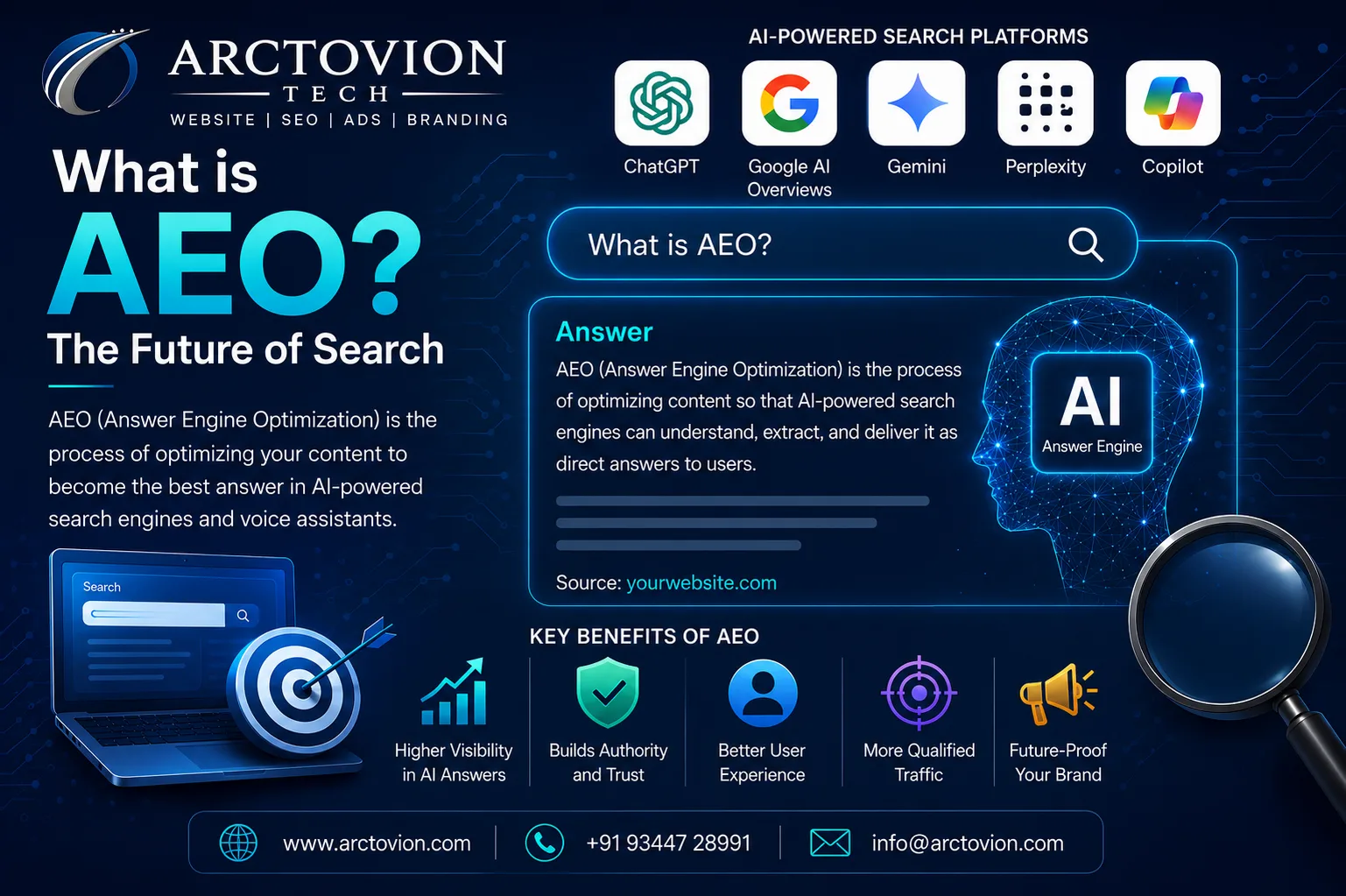
What is AEO? The Future of Search in the Age of AI
Learn what Answer Engine Optimization (AEO) is, how it differs from traditional SEO, and how to optimize your content for AI-powered search engines like ChatGPT, Gemini, and Google AI Overviews.
 SEO
SEO
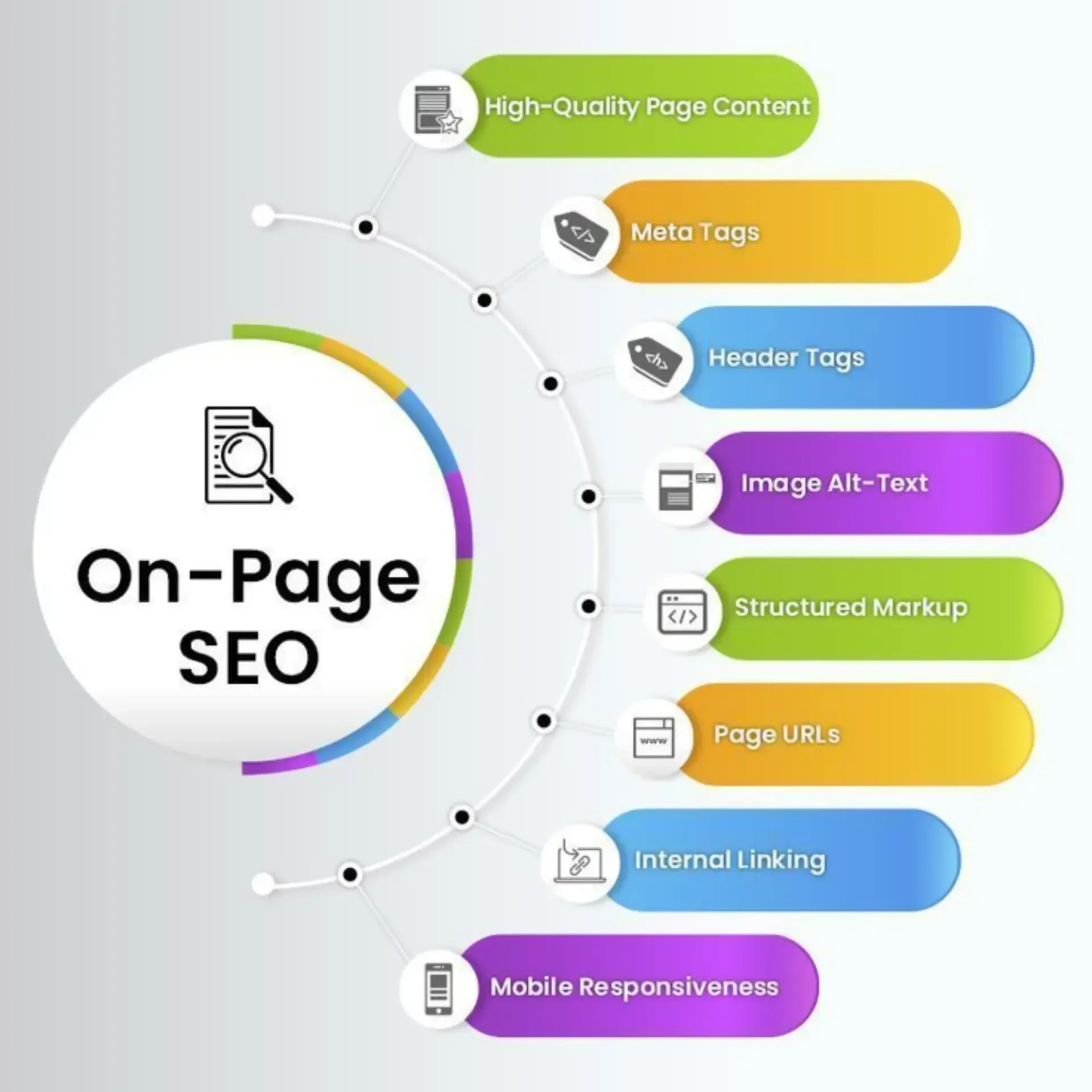
What is On-Page SEO? A Beginner's Guide to Optimizing Your Web Pages
On-page SEO is the practice of optimizing your web pages, including content, titles, headings, images, and internal links, so search engines understand them and users enjoy them. This beginner's guide covers the key elements, a simple checklist, and step-by-step tips to help your pages rank higher on Google.
 SEO
SEO
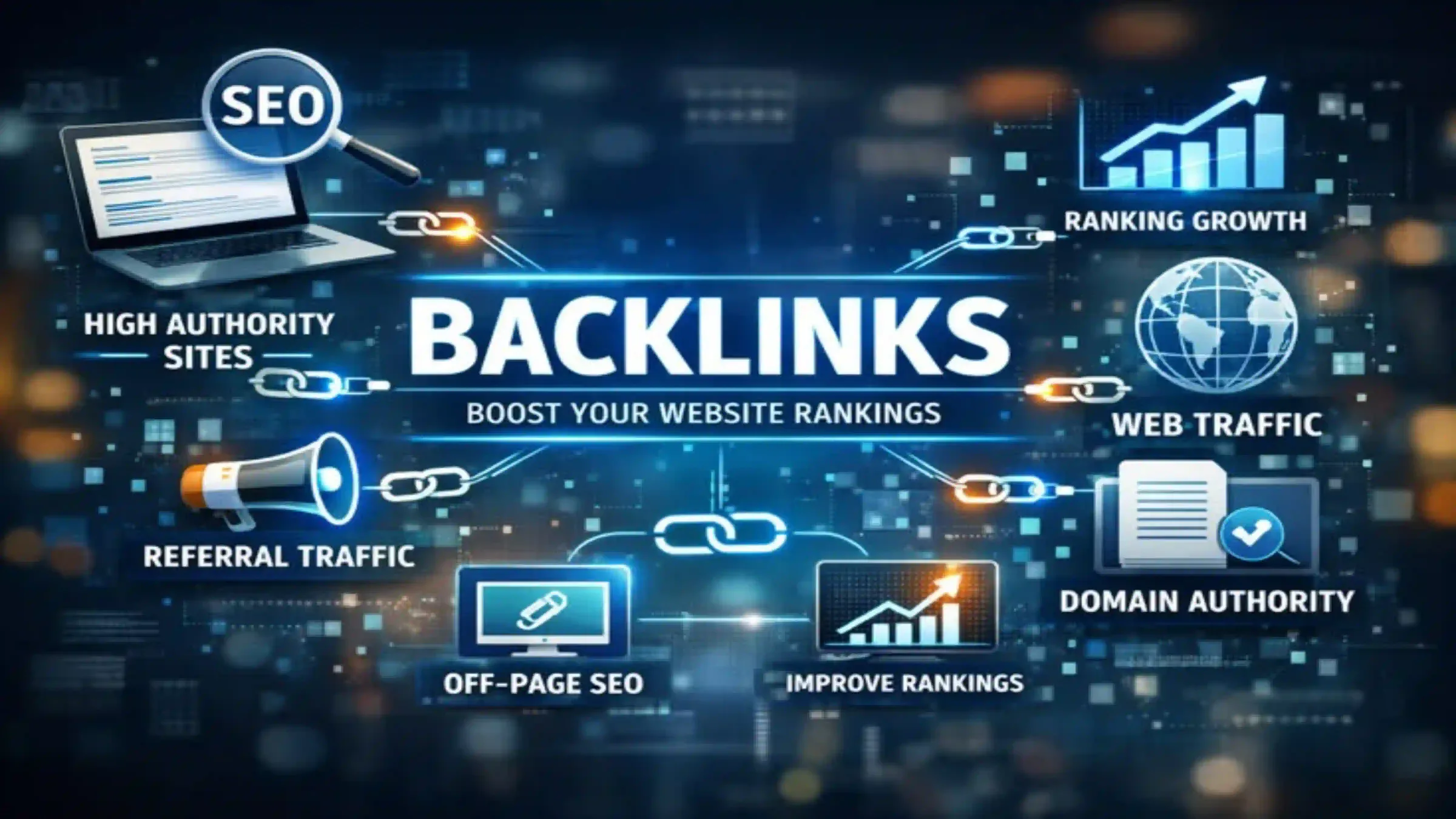
What are Backlinks? A Beginner's Guide to Link Building in SEO
Backlinks are links from other websites that point to your website, and search engines see them as votes of trust. The more relevant, quality sites that link to you, the higher your pages can rank on Google. This beginner's guide explains what backlinks are, the different types, and simple steps to build them the right way
 SEO
SEO
What is Search Intent? A Beginner's Guide to User Intent
Search intent is the reason behind a search query. For the topic of SEO, people searching are at very different stages: some are asking what SEO even means, others are comparing agencies, and some are ready to hire. The blog should match the intent of the keyword it targets, and support the other three through links and CTAs.
 SEO
SEO
What is SEO
Learn what SEO is, how it works, its key types, and the best practices businesses can use to improve search visibility, attract organic traffic, and generate more leads.
 ABOUT
ABOUT
Why We Founded Arctovion Tech
Discover why Arctovion Tech was founded as a custom software development company in Chennai to help businesses build tailored software, web applications, mobile apps, and digital solutions that simplify operations and support long-term growth.
Comments
Join the discussion — comments are moderated before they appear.
Loading…